Total Articles 231+

Core Review Streams

Covers key sustainability themes, analyzing practices, challenges, and innovations shaping environmental and corporate responsibility.

Showing 12/65

31 Jul 2026

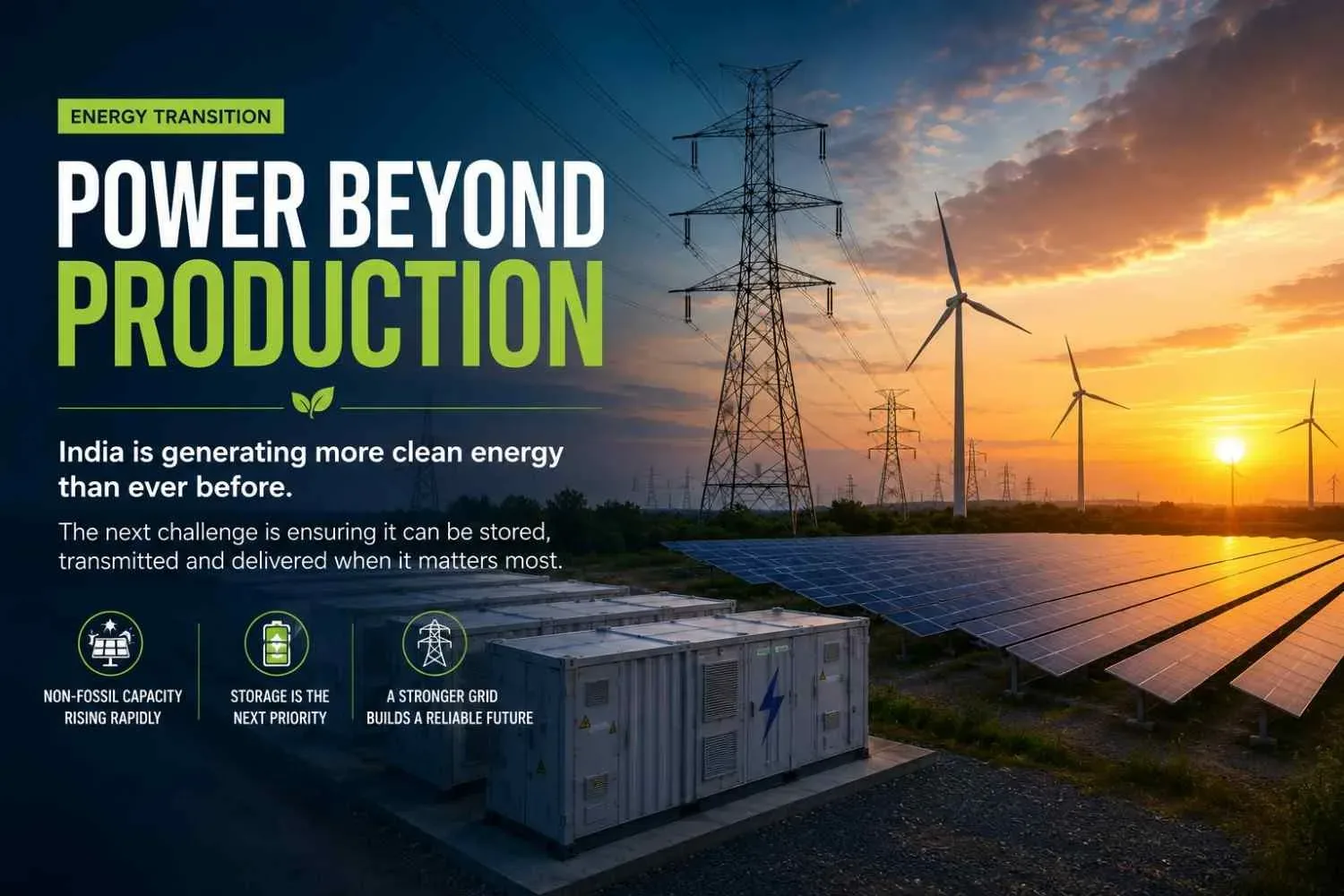
India is generating more clean energy than ever before. The next challenge is ensuring it can be stored, transmitted and delivered when it matters most     KOLKATA | JULY 31,2026India is making notable strides in its renewable energy transition. The expansion of solar parks, the growth of wind energy projects, and the steady increase in non-fossil fuel capacity highlight the country's progress toward its climate commitments. At the same time, another fundamental question is coming into sharper focus. Can India's electricity grid and energy storage systems keep pace with the rapid expansion of renewable power? The answer will play a decisive role in determining whether India's clean energy ambitions are matched by a resilient electricity system or limited by inadequate grid and storage capacity. India has made substantial progress in scaling up its non-fossil electricity capacity through sustained investments in solar, wind, hydropower, and nuclear energy. As a result, the country is steadily advancing toward its target of 500 GW of non-fossil capacity by 2030 while emerging as one of the fastest-growing renewable energy markets globally. The greater challenge, however, lies beyond generation- it is ensuring that the grid and energy storage systems can efficiently integrate and deliver this growing supply of clean power. While renewable energy capacity continues to expand, its effective utilisation remains a major challenge. Solar generation declines after sunset, and wind power fluctuates with changing weather conditions. For clean electricity to be available whenever and wherever it is needed, sufficient energy storage and a resilient transmission network are essential. Consequently, the focus of India's energy transition is shifting from merely generating renewable power to integrating it efficiently into the electricity system. As the share of renewable energy grows, the role of Battery Energy Storage Systems (BESS), pumped hydro storage projects, and modern transmission networks becomes critical. These technologies provide the flexibility required to store excess electricity, balance demand and supply, and maintain grid stability despite the intermittent nature of solar and wind power. Recent policy initiatives indicate a growing shift towards strengthening these enabling infrastructures alongside renewable energy expansion. Recognising the need for stronger supporting infrastructure, the government has announced large-scale battery storage programmes, accelerated interstate transmission projects, and encouraged investments in flexible power systems. Several states are also co-locating energy storage facilities with new renewable energy parks, reflecting an understanding that future electricity systems must expand generation, storage, and transmission in tandem. Even with these initiatives, critical gaps continue to hinder the pace of the transition. However, the transition is far from complete. Many energy storage projects remain in the pipeline, and utility-scale battery systems continue to be costlier than conventional power alternatives. Transmission infrastructure, too, has struggled to keep pace with the rapid growth of renewable energy, especially where large solar and wind projects are situated far from major demand centres. The expansion of storage and transmission infrastructure is further constrained by delays in land acquisition, regulatory approvals, and access to finance. At the same time, integrating increasing volumes of renewable energy into the national grid requires accurate forecasting, real-time digital monitoring, and smarter grid management technologies. The consequences of these challenges extend beyond the electricity sector, influencing energy security, industrial competitiveness, and the pace of India's broader low-carbon transition. Reliable renewable electricity is becoming the foundation of India's next-generation industries. Clean manufacturing depends on a dependable supply of low-carbon power, electric mobility requires a stable electricity network, and green hydrogen production demands uninterrupted renewable energy. Without sufficient storage capacity and modern transmission infrastructure, these sectors could struggle to realise their full potential despite the country's growing renewable energy capacity. For this reason, experts increasingly argue that India's clean energy transition must now be judged not only by the number of megawatts it adds, but by its ability to build an integrated, resilient, and flexible energy ecosystem capable of delivering clean power whenever and wherever it is needed. Meeting the next phase of the energy transition will require more than expanding renewable generation. It demands greater investment in domestic battery manufacturing, faster development of pumped hydro storage, modernised grid infrastructure, wider deployment of smart grid technologies, and increased private-sector participation in energy storage. Equally vital is effective coordination among central agencies, state utilities, and renewable energy developers to accelerate project execution and strengthen grid reliability. For consumers, the impact of these measures may not be immediately visible. Over time, however, they will translate into fewer power disruptions, a more dependable electricity supply, stronger support for low-carbon industries, and the ability to deliver clean energy generated during the day whenever demand is highest. As India approaches its 2030 renewable energy targets, the real challenge is no longer generating more clean electricity-it is ensuring that every unit of that electricity can be stored, transmitted, and delivered reliably. The next chapter of the energy transition will be written not in solar parks or wind farms alone, but in batteries, transmission corridors, and smarter electricity grids. In the end, India's clean energy future will not be defined by the scale of its renewable capacity, but by the strength of the infrastructure that supports it. Because renewable energy fulfils its promise only when clean power is available - not just when it is generated, but whenever and wherever it is needed. Sources:  Ministry of New and Renewable Energy (MNRE) – Energy Storage Systems (ESS) Overview (https://mnre.gov.in/en/energy-storage-systemsess-overview/)Ministry of New and Renewable Energy (MNRE) – Energy Storage Systems Technical Reports (https://mnre.gov.in/en/document-category/energy-storage-systemsess-technical-reports/)Central Electricity Authority (CEA) – Integrated Resource Planning (https://cea.nic.in/integrated-resource-planning-division/?lang=en)Central Electricity Authority (CEA) – National Electricity Plan (Generation) (https://cea.nic.in/integrated-resource-planning-division/?lang=en)Ministry of New and Renewable Energy (MNRE) – State Resource Adequacy Planning (https://mnre.gov.in/en/state-resource-adequacy-planning/)Ministry of Power, Government of India (https://powermin.gov.in/)Press Information Bureau (PIB), Government of India (https://pib.gov.in/)NITI Aayog – India's Energy Storage Mission: A Make-in-India Opportunity for Globally Competitive Battery Manufacturing (https://mnre.gov.in/en/document-category/other-reports/)International Energy Agency (IEA) – India Energy Outlook (https://www.iea.org/countries/india)International Renewable Energy Agency (IRENA) (https://www.irena.org/) ...Read more

31 Jul 2026

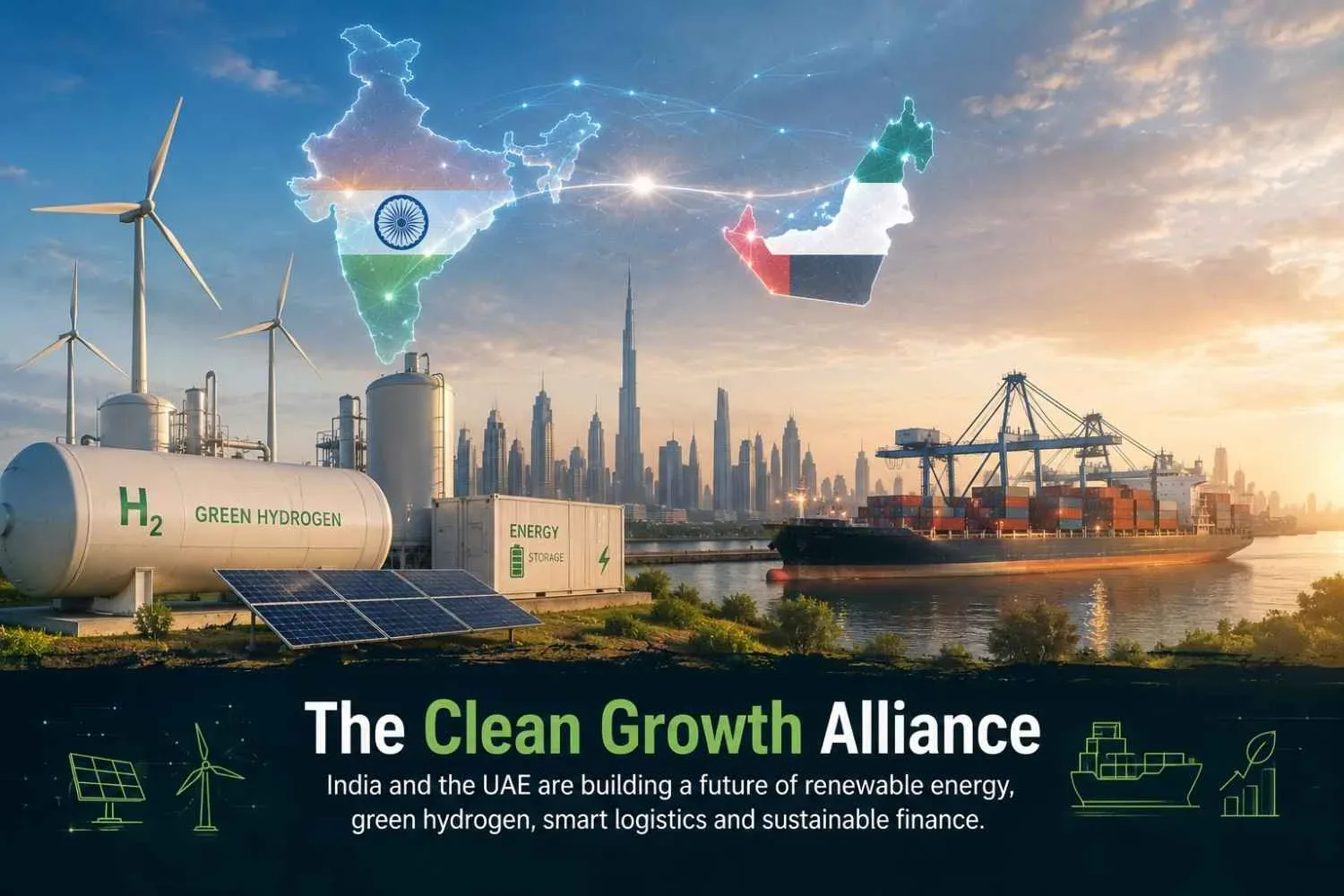
India and the UAE are deepening cooperation in renewable energy, green hydrogen, logistics and sustainable finance, signalling a shift from traditional commerce to long-term clean growth KOLKATA | July 30, 2026: For years, the India-UAE partnership has been driven by trade, investment and energy cooperation. Today, it is being redefined by a new priority- building a low-carbon future together. Renewable energy, green hydrogen, sustainable finance and resilient infrastructure are increasingly moving to the centre of bilateral cooperation as both countries respond to the growing demand for cleaner energy and more sustainable economic growth. For India, the UAE is no longer just an important trading partner. It is emerging as a strategic ally in accelerating the country's clean energy transition. The partnership is no longer just about strengthening economic ties. It is about shaping the future of clean energy.This raises an important question: can India and the UAE together accelerate the transition to a low-carbon economy while creating new opportunities for trade and investment? Recent developments suggest they are moving in that direction. Renewable energy has become a cornerstone of the partnership, with UAE-based companies investing in India's solar and wind sectors and both countries exploring ambitious clean energy projects. The investments are reinforcing India's clean energy ambitions by supporting renewable energy expansion and reducing long-term dependence on fossil fuels.Green hydrogen is quickly emerging as the next frontier of cooperation. With its potential to decarbonise energy-intensive industries such as steel, fertilisers, chemicals and heavy transport, green hydrogen has become a key focus area for both India and the UAE.While India is implementing the National Green Hydrogen Mission, the UAE is positioning itself as a major global producer and exporter of clean hydrogen. As these ambitions converge, collaboration through technology partnerships, joint projects and long-term supply agreements is expected to accelerate.The partnership is also moving beyond energy generation to the infrastructure that supports global trade. Investments in ports, transport corridors, warehousing and digital logistics systems can improve the movement of industrial goods and clean energy equipment while reducing trade costs. In today’s carbon-conscious economy, efficient logistics are shifting from a speed issue to a strategic advantage. Another area witnessing growing collaboration is green finance. Sustainable investment funds, climate finance and ESG-linked capital are playing an increasingly important role in supporting renewable energy projects, resilient infrastructure and low-carbon industrial growth.For Indian businesses, access to these financial resources could accelerate technology upgrades and help meet rising global sustainability expectations. Sectors such as renewable energy manufacturing, battery storage, hydrogen technologies, sustainable construction materials and clean transport stand to gain from stronger investment flows and expanding market opportunities. Even so, translating ambition into action will not be easy. Large-scale green projects require supportive policies, timely regulatory approvals, skilled manpower and modern infrastructure. Affordable financing, technology partnerships and long-term commercial viability will also determine whether these initiatives move beyond announcements and turn into implementation. Experts say continued coordination between India and the UAE will be essential to ensure that investments deliver measurable economic growth alongside meaningful environmental progress. For most citizens, the effects of this cooperation may not be visible today, but its long-term impact could be significant. Cleaner energy investments can enhance energy security, generate employment, support technological innovation and contribute to a healthier environment. At the same time, modern logistics can strengthen supply chains and improve the competitiveness of Indian products in international markets. As climate action reshapes the global economy, the India-UAE partnership is becoming more than an economic relationship - it is emerging as a strategic collaboration for a more sustainable future. The future of the India-UAE partnership may no longer be measured by trade volumes alone, but by how effectively the two countries work together to build cleaner industries, drive innovation and lead the transition towards a more sustainable global economy. Sources: Ministry of External Affairs (Government of India) – India-UAE Bilateral Relationshttps://www.mea.gov.in/Portal/ForeignRelation/India-UAE_Bilateral_Brief.pdfMinistry of Commerce & Industry (Government of India) – India-UAE CEPAhttps://commerce.gov.in/trade/international-trade/trade-agreements/india-uae-cepa/Ministry of New and Renewable Energy (MNRE)https://mnre.gov.in/International Renewable Energy Agency (IRENA) – Green Hydrogen & Energy Transition Reportshttps://www.irena.org/Abu Dhabi Future Energy Company (Masdar)https://masdar.ae/AD Ports Group – India Investments & Logistics Projectshttps://www.adportsgroup.com/DP World – India Operations & Trade Logisticshttps://www.dpworld.com/Invest India – UAE Investment & Clean Energy Partnershipshttps://www.investindia.gov.in/Press Information Bureau (PIB), Government of Indiahttps://pib.gov.in/The Economic Times – Energy & Infrastructurehttps://energy.economictimes.indiatimes.com/ ...Read more

30 Jul 2026

Global Sustainability Forum 2026 to Bring International SDG Leaders to Tunis TUNIS: The Global Sustainability Forum 2026 will be held in Tunis, Tunisia, in October, bringing together policymakers, sustainability experts, business leaders, academics, institutional representatives and young ambassadors from across the world to advance practical action on the United Nations’ 17 Sustainable Development Goals. Designed as a platform for international dialogue, recognition and collaboration, the forum will focus on workable responses to urgent global challenges, including climate change, responsible economic growth, social inclusion, ethical leadership, innovation and cross-border partnerships. Organisers expect participation representing more than 40 nationalities, with a strong presence from Europe, Asia, Africa and the Middle East. The gathering will also serve as the concluding and recognition ceremony of the Global Goals Connections (GGC) Ambassadors 2026 programme, launched in March 2026. The programme has sought to build a multicultural network of sustainability advocates capable of translating the SDGs from global commitments into locally relevant initiatives. Public communications by GGC indicate that the Tunisia forum is scheduled for October 2026. The choice of Tunis gives the forum a strategically important location at the meeting point of Africa, the Mediterranean and the Arab world. It is expected to enable wider South–South and North–South conversations on development priorities, climate resilience, entrepreneurship, education and inclusive growth.     The RELTTAW Association has announced a strategic partnership with Global Goals Connections, World Book of Records London, Global Ethix Canada and Global Ethix International in support of the forum. The partnership is expected to widen the event’s institutional reach, encourage knowledge exchange and recognise individuals and organisations demonstrating leadership in sustainability, education, innovation and social impact. RELTTAW has previously collaborated with World Book of Records in international recognition and educational initiatives. World Book of Records London operates as a platform documenting and honouring notable achievements, while its recent international programmes have brought together participants from several countries. SustainVerse.org will provide editorial coverage of the Tunis gathering. Its Editor-in-Chief, Prof Ujjwal K. Chowdhury, will attend the Global Sustainability Forum 2026 and report directly from the venue. He will also interview leading policymakers, sustainability practitioners, innovators, academics and other prominent participants, bringing their perspectives, solutions and commitments to SustainVerse’s readers and digital audiences.  The forum is expected to underline an increasingly important message: achieving the 2030 Agenda will require more than declarations. It will demand measurable action, ethical partnerships, youth participation, institutional accountability and sustained cooperation between governments, businesses, universities, civil-society organisations and communities. Corina Sujdea, President, RELTTAW Mr. Santosh Shukla, CEO, World Book Of Records London Prof. Ujjwal K. Chowdhury, Editor-in-Chief, SustainVerse.org ...Read more

29 Jul 2026

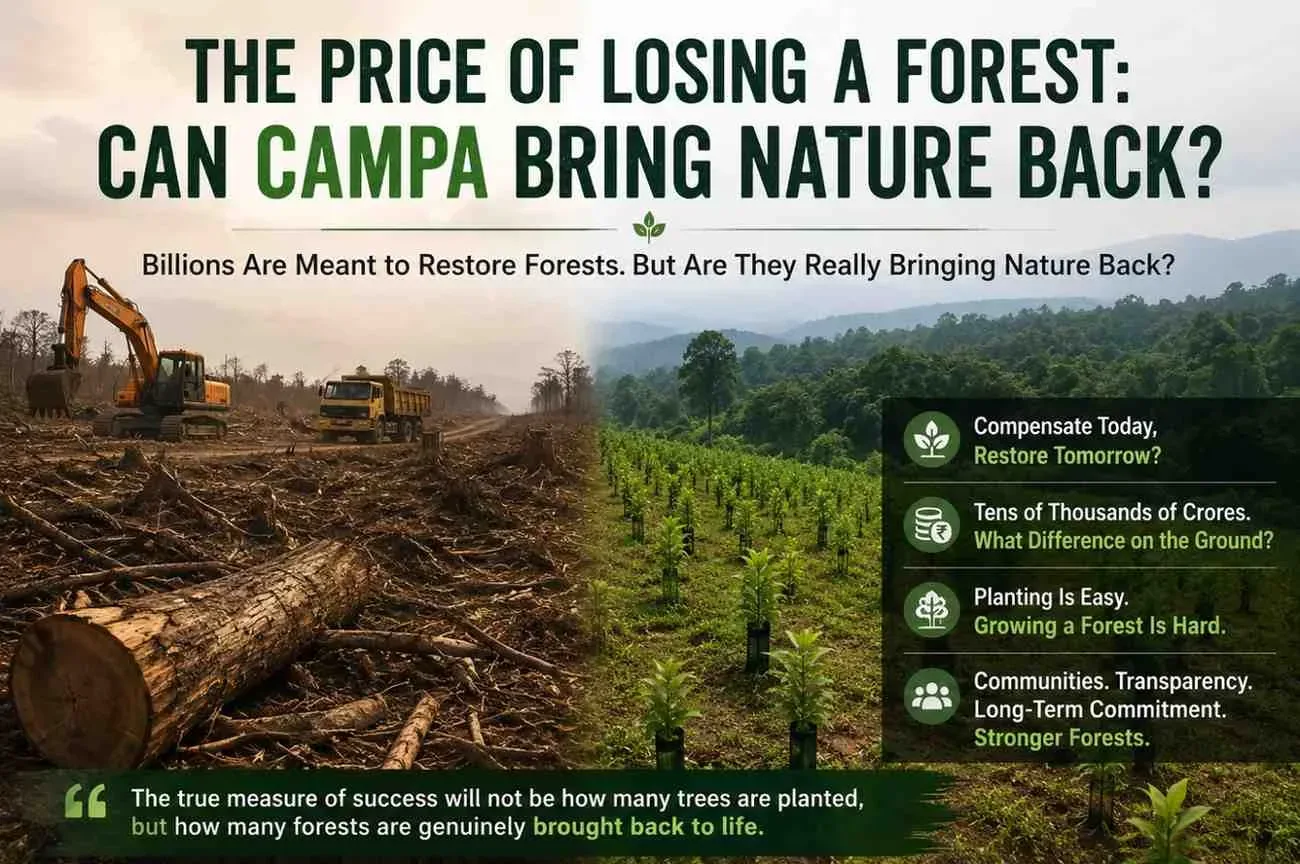
Billions Are Meant to Restore Forests. But Are They Really Bringing Nature Back?   Every time forest land is diverted for highways, railways, mines or industrial projects, developers are expected to compensate by creating forests elsewhere. On paper, the principle appears simple: replace what is lost. But the debate is no longer about whether compensation is provided- it is about whether it truly replaces what has been lost. The real test of compensatory afforestation is not the number of saplings planted, but whether lost forests are truly being restored.That question has gained renewed attention after the 10th July meeting of the National Compensatory Afforestation Fund Management and Planning Authority (CAMPA), where officials reviewed the implementation of one of India's largest ecological restoration programmes. The meeting may have focused on fund utilisation and afforestation progress, but it revived a much larger question: are CAMPA funds creating resilient forest ecosystems, or are they only measuring success through plantation numbers?  Understanding CAMPA CAMPA was created around a simple principle: when forests are lost to development, the ecological cost should be invested back into restoration. Under the mechanism, developers who divert forest land for non-forest purposes contribute funds towards rebuilding forest ecosystems elsewhere.These funds support afforestation, natural regeneration, wildlife conservation, forest protection, soil and water conservation, fire prevention and improvements in forest management infrastructure. CAMPA now represents one of India's largest environmental funding pools, with tens of thousands of crores dedicated to compensating for forest loss.The challenge, however, is not only how much money is available- it is whether that money is rebuilding forests or merely adding to plantation statistics. The Bigger Question Isn't Spending- It's Ecological Recovery Much of the attention on CAMPA revolves around fund utilisation. Rather than asking how much money has been spent, experts say the more important question is what difference those investments have made on the ground.Plantation numbers may look impressive on paper, yet forests cannot be measured by saplings alone. A healthy forest supports wildlife, stores carbon, protects water and soil, and provides livelihoods for communities that depend on it. Restoration cannot be measured by plantation numbers alone. If saplings fail to survive or diverse natural forests give way to monoculture plantations, the ecological gains may remain limited despite substantial investments. Ecologists say the conversation must move beyond how much was spent to what ecological outcomes were achieved. Planting Is Easy- Growing a Forest Is Hard One of the biggest questions surrounding compensatory afforestation is what happens after the plantation drive ends. Saplings need years of monitoring, protection and maintenance before they can grow into self-sustaining forests. Without sustained care, survival rates can fall significantly, limiting the ecological value of restoration efforts. Many environmental experts argue that public reporting should go beyond the number of saplings planted and include their survival after three, five and even ten years. Such long-term monitoring would provide a more reliable measure of whether restoration efforts are creating lasting ecological benefits. Can New Plantations Replace Natural Forests? The debate extends beyond the number of trees planted. An equally important question is whether newly created plantations can truly compensate for the loss of mature natural forests. Many researchers argue that plantation figures tell only part of the story.A natural forest is far more than a collection of trees. It develops over decades or centuries, supporting biodiversity and ecological processes that cannot be recreated overnight. Compensatory plantations, often made up of fewer species, may not fully replace these functions.That is why many conservationists argue that success should be measured by ecological restoration rather than plantation targets. Restoring degraded ecosystems, conserving existing forests and planting native species are widely considered more effective ways to rebuild resilient landscapes. Restoring Forests Requires Restoring PartnershipsForest restoration is not just an ecological exercise- it is also a community effort. Many experts argue that Indigenous communities, forest-dependent households and local residents should be treated as partners rather than participants. Their understanding of local ecosystems can improve the choice of native species, strengthen long-term management and increase plantation survival. Equally important, community involvement helps maintain accountability long after the plantation drive is over. Transparency Strengthens Accountability Many experts believe that transparency is essential to improving forest restoration. They argue that district-level information on CAMPA projects- including where funds are spent, how plantations are performing and what ecological outcomes are being achieved- should be easily accessible to the public. Greater openness would allow citizens to track progress, strengthen accountability and help governments identify restoration approaches that deliver the best results. More Than Planting TreesIndia's environmental commitments have made CAMPA a critical instrument for forest restoration. But its legacy will not be determined by financial allocations or plantation statistics alone. It will be determined by whether today's investments restore ecosystems that can withstand climate change, protect biodiversity and support future generations. In the years ahead, the true measure of success will not be how many trees are planted- it will be how many forests are genuinely brought back to life.         Sources: National Compensatory Afforestation Fund Management and Planning Authority (CAMPA) – Ministry of Environment, Forest and Climate Change (MoEFCC)https://moef.gov.in/en/division/forest-and-wildlife-division/national-campa/ Compensatory Afforestation Fund Act, 2016 (CAF Act) – Government of Indiahttps://legislative.gov.inForest Survey of India (FSI) – India State of Forest Report (ISFR)https://fsi.nic.in Down To Earth – Environment and forest restoration coverage, including CAMPA implementation and afforestation debateshttps://www.downtoearth.org ...Read more

28 Jul 2026

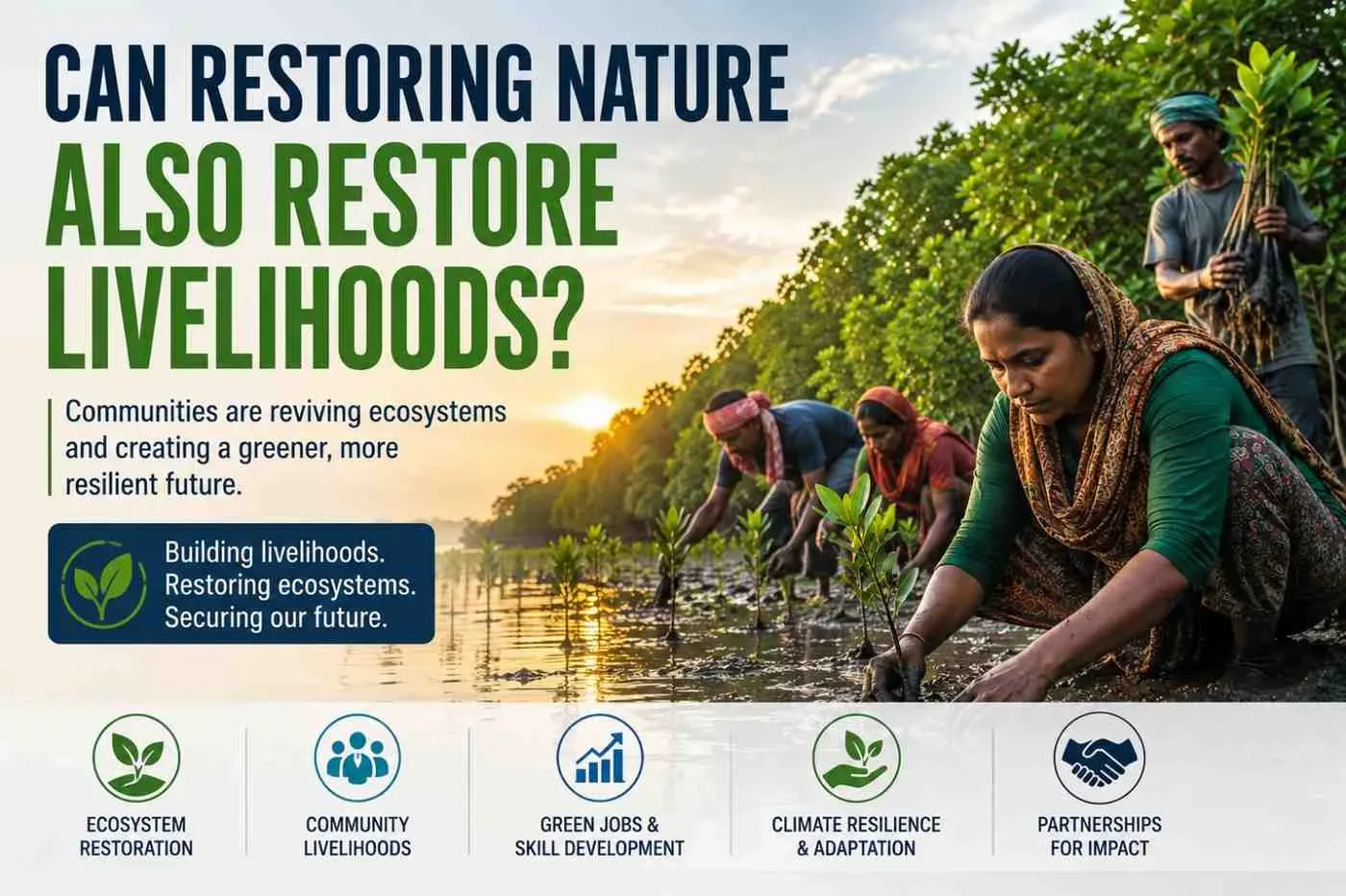
A workshop in Kolkata has sparked a larger conversation about whether restoring ecosystems can also restore livelihoods, especially for communities that have protected nature for generations. Can restoring nature also restore livelihoods? As communities revive forests, wetlands and mangroves, a new conversation is emerging around climate action, employment and long-term resilience. The discussion gained momentum following a recent climate workshop in Kolkata, where experts, researchers, community leaders and environmental practitioners explored how community-led climate action can create meaningful jobs while restoring ecosystems. While the conversations began at the local level, the ideas resonate far beyond the city.As countries invest more in climate action, a bigger opportunity is beginning to emerge. Experts believe community-led restoration can not only revive ecosystems but also create inclusive, long-term livelihoods for the people who depend on them.But an equally important question remains.Can green jobs evolve into stable, long-term careers, or will they continue to depend on short-lived projects and temporary funding? Around the world, climate action is being backed by investments in restoring nature. Whether it involves bringing forests back to life, reviving wetlands, rejuvenating urban lakes or protecting vulnerable coastlines, these efforts require skilled hands and local knowledge. Experts argue that the communities protecting these ecosystems ought to be the primary beneficiaries of the opportunities they generate.For India, this conversation is especially significant. As the country works towards expanding forest cover, restoring degraded landscapes and building climate resilience, the need for a skilled green workforce is becoming important. Experts say achieving these ambitions will depend on professionals trained in ecological restoration, biodiversity monitoring, sustainable agriculture, waste management and other nature-based solutions.Yet the workshop made one point particularly clear- green jobs cannot succeed on numbers alone. Their future will depend on skilled training, reliable career pathways and valuing the traditional knowledge that communities have passed down for generations. This made traditional ecological knowledge one of the defining themes of the discussions. For centuries, communities living closest to nature have learned how to work with it. Across India, Indigenous groups, fisherfolk, farmers and forest-dependent households have built a deep understanding of forests, wetlands, mangroves, biodiversity and changing weather through lived experience. Experts believe this traditional knowledge should play a central role in shaping restoration efforts rather than simply supporting them.Several restoration initiatives have already demonstrated the value of community participation. From mangrove conservation along India's coastlines to watershed restoration in drought-prone regions and community-managed forests across different states, these efforts show that restoration is more likely to succeed when local people are involved in planning, implementation and long-term monitoring. But training people is only the beginning! The real challenge is ensuring that green skills open the door to credible, long-term careers rather than remaining part of short-lived training programmes. Experts say the real opportunity lies in creating skills that remain valuable long after individual restoration projects are completed. Whether it is nursery management, biodiversity surveys, GIS mapping, climate-risk assessment or environmental monitoring, specialised training can help build a workforce prepared for the demands of a greener economy.They also believe stronger collaboration between governments, educational institutions, businesses and civil society organisations will be key to improving certification, creating employment opportunities and supporting continuous learning. In this transition, the private sector is expected to emerge as an equally important partner. As sustainability becomes a bigger priority for businesses, the demand for professionals who understand ecological restoration, climate resilience and environmental reporting is expected to rise. Experts believe this could create meaningful career opportunities for young people while helping India build a greener and more resilient economy.One message echoed throughout the workshop: green jobs should be valued not just for the number of people they employ, but for the livelihoods they sustain. Fair wages, long-term income security, safe working conditions and genuine community participation will decide whether restoration efforts create lasting change or simply fade with project funding. Ultimately, the discussions in Kolkata pointed to a much larger truth- building a greener future does not require choosing between climate action and economic development. A greener future will require both to move forward as one.Every restored forest, wetland, river and coastline represents more than an environmental success- it is an investment in the future of both people and nature. The real task now is ensuring that the opportunities created are inclusive, credible and long-lasting. As countries invest more in climate solutions, the focus must shift from counting projects to creating lasting opportunities for the people leading them. Building a resilient economy will require communities to be recognised not just as participants, but as long-term partners in the journey. Because if restoring nature is about protecting tomorrow, it should also help secure the livelihoods of those shaping that future today!   Sources:International Labour Organization (ILO) – Green Jobs Programme   United Nations Environment Programme (UNEP)   United Nations Development Programme (UNDP)  UN Decade on Ecosystem Restoration (2021–2030)  Ministry of Environment, Forest and Climate Change (MoEFCC), Government of India  Ministry of Skill Development and Entrepreneurship (MSDE), Government of India  National Skill Development Corporation (NSDC)  Green Skill Development Programme (GSDP), MoEFCC   National Mission for Green India   National Biodiversity Authority (NBA)   Wildlife Institute of India (WII) ...Read more

28 Jul 2026

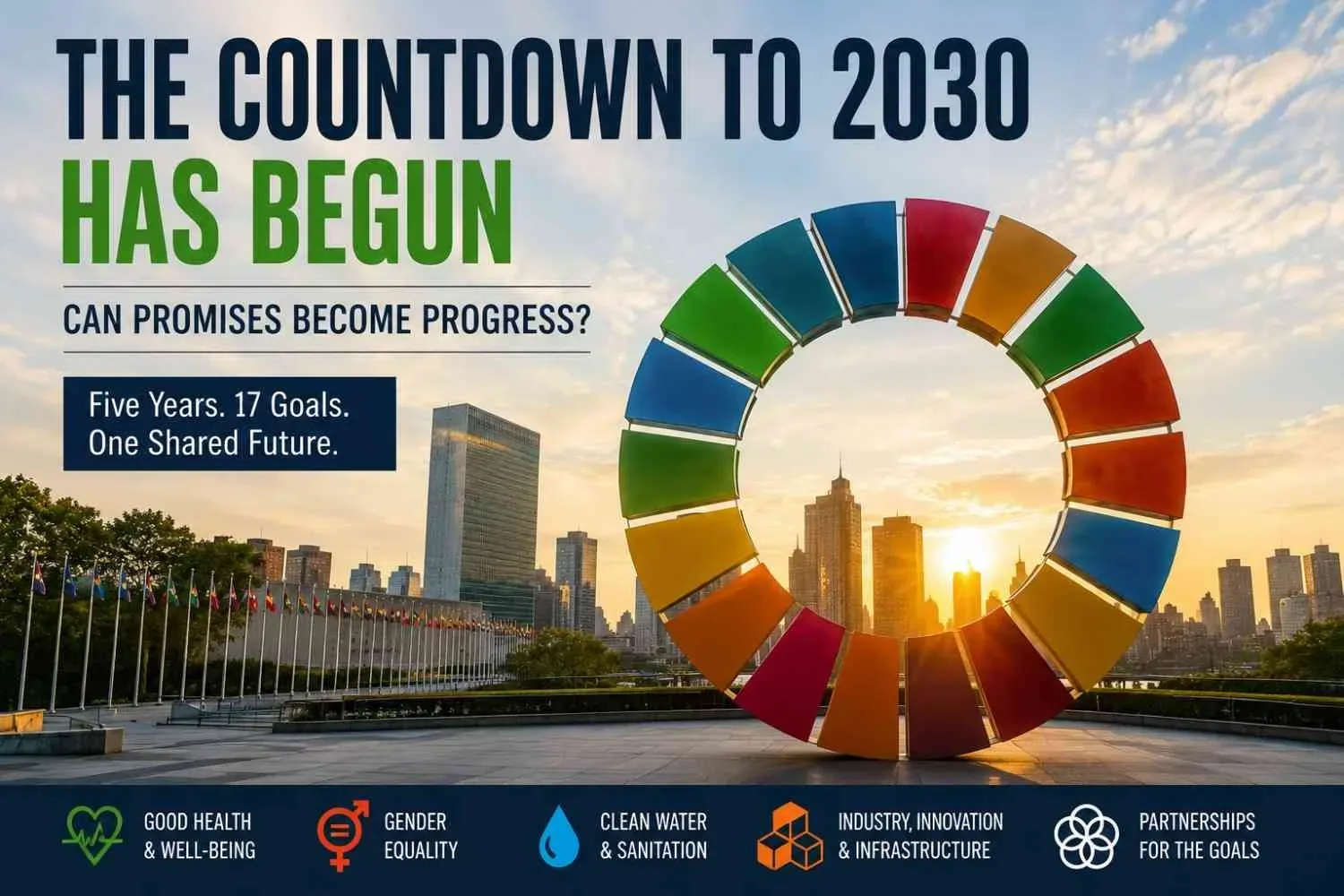
The UN's latest global review isn't just measuring progress- it is testing whether countries can still deliver on the promises they made a decade ago   With only five years remaining to meet the United Nations' Sustainable Development Goals (SDGs), global attention has once again turned to the pace of progress. The High-Level Political Forum (HLPF), taking place at UN Headquarters in New York from 7 to 15 July, is assessing how countries are advancing on five key goals that directly affect billions of people. This year's forum is reviewing progress on five Sustainable Development Goals: SDG 3 (Good Health and Well-being), SDG 5 (Gender Equality), SDG 6 (Clean Water and Sanitation), SDG 9 (Industry, Innovation and Infrastructure), and SDG 17 (Partnerships for the Goals). Together, these goals shape many aspects of sustainable development, from healthcare and clean water to resilient infrastructure and global cooperation.But the discussions also raise a critical question.The final five years of the 2030 Agenda have begun, bringing renewed focus on whether countries can turn a decade of commitments into measurable results. The latest UN assessments paint a mixed picture. Progress in healthcare, clean water and digital infrastructure has been encouraging in several countries, but it has been uneven. Climate change, economic instability, conflicts and widening inequalities continue to hamper development, leaving many of the Sustainable Development Goals off track. For India, the forum serves as an opportunity to assess both achievements and unfinished priorities.The country has made steady progress by expanding access to drinking water through the Jal Jeevan Mission, strengthening digital public infrastructure, increasing renewable energy capacity and extending healthcare coverage under Ayushman Bharat. Despite these gains, India continues to face hurdles in expanding equitable healthcare, improving sanitation, increasing women's participation in the workforce and developing infrastructure that can withstand climate-related risks. Experts say the HLPF is more than just an annual review of global commitments. It provides a platform for governments to showcase national progress, share successful policies and identify areas where greater international cooperation is needed. Among the key issues expected to dominate discussions is water security. Erratic rainfall, shrinking groundwater reserves and growing urban demand are intensifying pressure on freshwater resources in many parts of the world. Experts say governments must invest not only in expanding water supplies but also in wastewater treatment, river conservation and water-use efficiency. Another key issue before the forum is gender equality. Despite gains in girls' education and women's leadership, significant inequalities persist in employment, equal pay, unpaid care work and personal safety.Experts say achieving the remaining Sustainable Development Goals will depend on ensuring that women and girls have equal access to education, healthcare, financial resources and decision-making opportunities. Health systems are another major focus. The COVID-19 pandemic exposed vulnerabilities in healthcare systems around the world, highlighting the need for stronger public health infrastructure, better disease surveillance, increased local production of medical supplies and universal health coverage.  Delegates are expected to explore ways to build more resilient health systems that are better prepared for future health emergencies. Infrastructure and innovation are also expected to feature prominently in the discussions as countries work towards cleaner and more inclusive economic growth. Investments in sustainable transport, climate-resilient cities, digital connectivity and low-carbon industries are gradually increasing as immediate priorities rather than long-term goals. Experts also stress that innovation must reach underserved communities to ensure the benefits of development are shared more equitably. Despite the diversity of issues on the agenda, one message continues to stand out: achieving the Sustainable Development Goals will require collective action, as no country can accomplish them alone.Partnerships between governments, businesses, financial institutions, researchers, civil society organisations and local communities are expected to play a critical role during the final years of the 2030 Agenda. Whether it’s through technology transfer, climate finance, knowledge exchange, or capacity building, stronger global cooperation will largely determine how well countries fill the remaining development gaps.As the forum progresses, the focus is shifting from setting ambitious targets to delivering measurable results. The next five years will be crucial in determining whether global commitments can translate into real improvements in people's lives. For countries like India, the challenge now is to build on recent gains while ensuring that future development is inclusive, climate-resilient and environmentally sustainable. The countdown to 2030 has entered its final stretch. The future of the Sustainable Development Goals will be shaped not by the commitments made at international forums, but by how effectively countries turn those commitments into lasting action.   Sources: United Nations – High-Level Political Forum on Sustainable Development (HLPF) 2026 United Nations Department of Economic and Social Affairs (UN DESA) United Nations Sustainable Development Goals (SDGs) Knowledge Platform UN Sustainable Development Report 2025/2026 UN Secretary-General's SDG Progress Report NITI Aayog – SDG India Index Ministry of Statistics and Programme Implementation (MoSPI), Government of India Jal Jeevan Mission, Ministry of Jal Shakti Ayushman Bharat, Ministry of Health and Family Welfare Open-source reports and official UN HLPF session documents (7–15 July 2026) ...Read more

27 Jul 2026

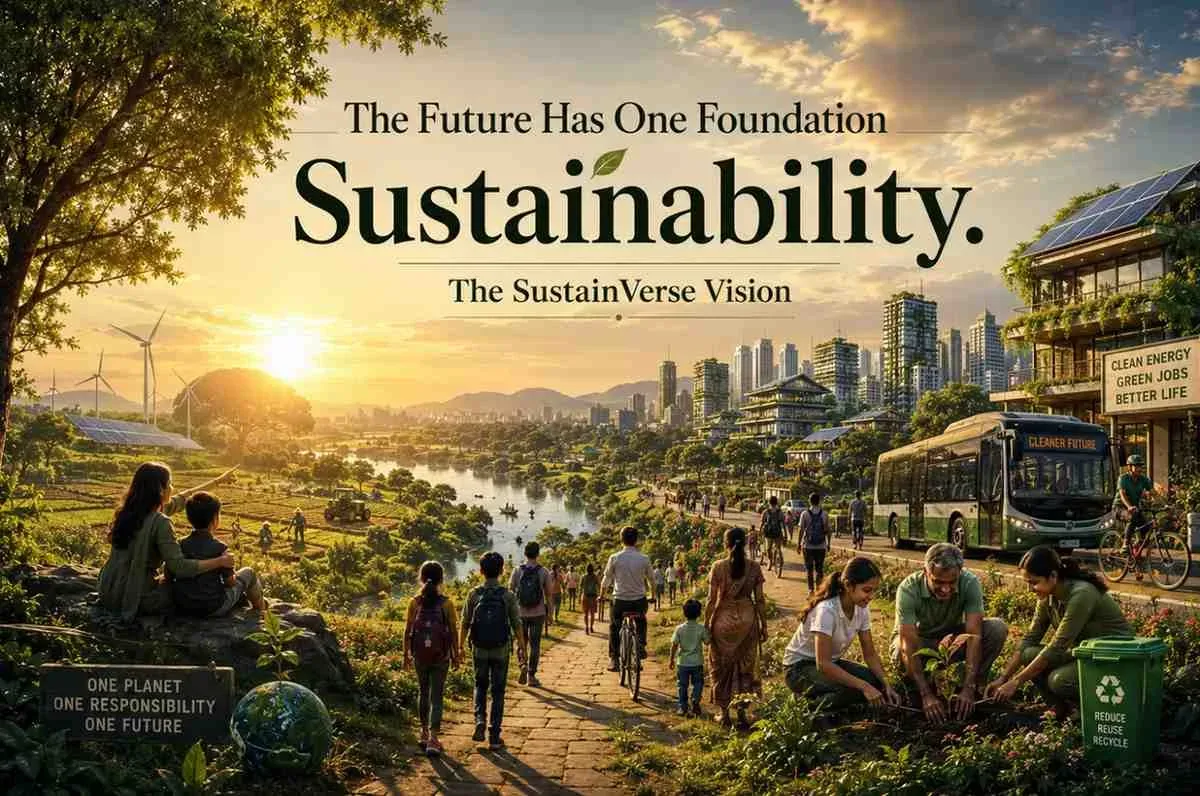
  Human civilization has reached a decisive moment. For centuries, progress was measured by how much we could produce, construct, consume and control. Forests became timber. Rivers became resources. Land became real estate. Human beings became workers, consumers and data points. Economic growth became more important than ecological balance, and speed often became more important than wisdom. That model of progress has brought extraordinary scientific and technological advances. But it has also produced polluted air, poisoned water, exhausted soil, disappearing species, crowded cities, climate anxiety, lifestyle diseases, social isolation and widening inequality. The great challenge before humanity is no longer simply how to grow. It is how to grow without destroying the foundations of life. Sustainability is therefore not a fashionable idea, a specialised environmental subject or an optional corporate activity. It is the most important civilizational principle for the future. It is the discipline of meeting human needs without stealing resources, health and opportunities from future generations. Sustainability asks a fundamental question: Can we live well without making the planet, society or ourselves unwell? The answer to that question will shape the future of humanity. And SustainVerse will bring you this answer in myriad ways, every day, through words and visuals, videos and audios, learning and action, stories and advice, in every possible form.  Sustainability Begins with the Human Body A sustainable civilization must begin with sustainable human beings. Modern life is increasingly characterised by processed food, disturbed sleep, long working hours, screen addiction, physical inactivity and constant psychological pressure. Many people are materially connected but emotionally exhausted. They possess more devices, yet experience less peace. They have access to more information, but struggle to find meaning. Sustainable living restores balance. It encourages nutritious and locally available food, regular movement, adequate rest, preventive healthcare, clean surroundings and a healthier relationship with technology. It values moderation over excess and well-being over endless consumption. Physical health cannot be separated from environmental health. Polluted air damages the lungs. Contaminated water spreads disease. Chemical-heavy food affects the body. Extreme heat increases cardiovascular and occupational risks. Noise pollution disturbs sleep and mental stability. A healthy person requires a healthy habitat. Mental and Emotional Sustainability Matter Human beings cannot live permanently in a state of competition, comparison and anxiety. A sustainable life creates space for reflection, relationships, community, creativity and emotional recovery. It recognises that mental health is not merely an individual medical issue. It is influenced by the way our cities, workplaces, schools, digital platforms and social systems are designed. Green spaces, walkable neighbourhoods, meaningful work, supportive communities and access to art and nature can improve emotional well-being. A society that protects time, dignity and human relationships is more sustainable than one that only maximises productivity. Emotional sustainability also means learning to live with empathy. It requires us to care about people whom we may never meet and generations that have not yet been born. Sustainability is, ultimately, an act of responsibility and compassion. Ecological Preservation Is Human Preservation Forests, rivers, wetlands, oceans, mountains, grasslands and mangroves are not decorative features of the planet. They are living systems that protect and sustain civilization. Forests regulate climate and support biodiversity. Wetlands absorb floods. Mangroves protect coastlines from storms. Healthy soil produces nutritious food. Rivers sustain agriculture and settlements. Oceans regulate weather and support millions of livelihoods. When ecosystems collapse, economies and societies collapse with them. Ecological preservation must therefore move from the margins of policymaking to its centre. Development projects must be evaluated not only by the roads, buildings or revenue they generate, but also by the forests, water systems, communities and biodiversity they affect. Human beings are not outside nature. We are part of nature. To protect ecology is not to oppose development. It is to protect the conditions under which development can continue. Education Must Teach Us How to Live The education system of the future cannot remain limited to examinations, degrees and employment. Learners must understand climate change, biodiversity, water, energy, food systems, waste, health and responsible consumption. Sustainability must not be treated as one chapter in a textbook. It must become a way of learning and living. Schools and universities can become living laboratories of sustainability through rainwater harvesting, renewable energy, waste segregation, biodiversity gardens, local food systems, repair workshops and community projects. Students should learn not only how to solve equations, but also how to solve real problems. They should learn to observe nature, work with communities, question wasteful practices and design responsible alternatives. Better learning practices are experiential, interdisciplinary and connected to life. They develop curiosity, cooperation, resilience and ethical judgment. Education must prepare young people not merely to enter the existing world, but to improve it. Mobility Must Move People, Not Pollution Transport is essential to modern civilization, but poorly designed mobility systems damage health, climate and quality of life. Cities cannot remain dependent on endless private vehicles, congested roads and fossil fuels. Sustainable mobility requires reliable public transport, safe walking paths, cycling infrastructure, shared mobility, cleaner fuels and appropriately designed electric transportation. The goal should not simply be to replace every petrol vehicle with an electric vehicle. The deeper goal must be to reduce unnecessary travel, shorten distances between homes and workplaces, improve public transport and design cities around people rather than automobiles. Sustainable mobility saves fuel, lowers emissions, reduces noise, improves public health and gives citizens more time. A good city is not one where the wealthy move rapidly in private cars while others struggle. It is one where every person can move safely, affordably and with dignity. Clean Air, Water and Food Are Fundamental Rights No society can call itself advanced when its citizens must purchase clean air, depend on tankers for water or worry about toxins in everyday food. Sustainability demands that clean air, safe water and nutritious food be treated as public priorities. Cleaner energy and transport can reduce air pollution. Watershed protection, wastewater treatment, rainwater harvesting and responsible groundwater use can strengthen water security. Regenerative agriculture, reduced chemical dependence, crop diversity and shorter supply chains can improve food quality. Food systems must also become fairer. Farmers should receive dignity and viable incomes. Consumers should receive safe and nutritious food. Nature should not be forced to bear the hidden cost of excessive chemical use, packaging, transportation and waste. Every breath, every glass of water and every meal connects human life to ecological systems. Sustainability Can Enrich Art and Culture Sustainability is not only about survival. It is also about beauty. Art, architecture, fashion, design, cinema, music and public culture can help people imagine a more harmonious civilization. Natural materials, local traditions, climate-sensitive architecture and indigenous knowledge can inspire contemporary creativity. Aesthetic sustainability does not mean rejecting modernity. It means creating beauty without waste, exploitation or ecological destruction. Art can transform sustainability from a technical conversation into an emotional experience. A painting can make a forest loss visible. A film can humanise a climate disaster. A song can unite a community. A well-designed public space can restore dignity and belonging. Culture teaches us what to admire, celebrate and desire. When culture glorifies excess, waste grows. When culture celebrates care, balance, craftsmanship and connection with nature, sustainable living becomes aspirational. The future must not only be greener. It must also be more beautiful. Healthcare Must Move from Treatment to Prevention Modern medicine has achieved remarkable success, but healthcare systems are increasingly burdened by diseases linked to pollution, stress, sedentary lifestyles and unhealthy food. Sustainable healthcare begins before a patient enters a hospital. It includes clean surroundings, nutritious food, preventive screening, physical activity, mental health support and public awareness. Hospitals themselves can reduce waste, improve energy efficiency, conserve water, manage biomedical materials responsibly and adopt greener procurement systems. Technology can expand access through telemedicine, remote diagnosis and better data systems. But technology must remain humane, affordable and inclusive. A sustainable healthcare system does not merely treat disease. It creates the conditions in which fewer people fall ill. Sustainable Business Is Better Business The business world is discovering that sustainability is not charity. It is strategy. Companies depend on stable supplies of water, energy, materials, labour and social trust. Climate disruption, resource scarcity, pollution, fragile supply chains and community conflict create direct business risks. Sustainable businesses use resources efficiently, reduce waste, design durable products, protect workers and build responsible supply chains. They invest in renewable energy, circular production, ethical sourcing and innovation. They do not merely ask, “How much profit can we make?” They also ask, “How is that profit being made, and what does it leave behind?” The businesses that understand sustainability will gain consumer trust, attract talent, reduce long-term costs and remain resilient in a changing world. Those that ignore it may find their technologies outdated, their supply chains disrupted and their reputations damaged. Sustainability is not against enterprise. It is the foundation of responsible and lasting enterprise. Stability Is More Valuable Than Reckless Speed Civilizations often become vulnerable when they pursue growth faster than their ecological and social systems can sustain. Unsustainable progress creates temporary prosperity and permanent damage. It can increase production while reducing soil fertility. It can expand cities while destroying water bodies. It can raise incomes while worsening health. It can build infrastructure while displacing communities and weakening ecosystems. Real progress must be stable, inclusive and regenerative. It must create jobs without degrading workers. It must expand infrastructure without destroying natural protection systems. It must increase prosperity without concentrating all benefits in a few hands. Sustainability provides civilization with resilience—the capacity to absorb shocks, recover from disasters and adapt to change. A sustainable society may sometimes move more carefully. But it moves with greater certainty. From Extracting to Regenerating The next stage of civilization must move beyond reducing harm. We must begin repairing what has been damaged. Regenerative agriculture can restore soil. Reforestation can revive landscapes. Wetland restoration can reduce floods. Circular manufacturing can recover materials. Responsible urban planning can bring nature back into cities. Community-led conservation can protect biodiversity while strengthening livelihoods. The future cannot be built only through less pollution, less waste and less destruction. It must also produce more biodiversity, more clean energy, more public health, more dignity and more social trust. The goal is not simply to leave a smaller footprint. It is to leave the Earth healthier because we lived on it. Everyone Has a Role Governments must create strong policies and enforce environmental safeguards. Businesses must redesign products, supply chains and investment priorities. Educational institutions must prepare responsible citizens. Media and cultural organisations must make sustainability understandable and engaging. But individuals also have power. Every purchase is a signal. Every journey is a choice. Every meal has an ecological story. Every unit of electricity and every litre of water connects personal behaviour to a larger system. Individual action alone cannot solve the crisis, but collective individual action can reshape markets, culture and politics. We can consume more thoughtfully, waste less, protect local ecosystems, support responsible businesses, use public transport, conserve water, reduce disposable materials and demand accountability from institutions. Sustainability must move from conferences into kitchens, classrooms, offices, factories, hospitals, farms, streets and homes. The Defining Idea of Our Time Every age is shaped by one great civilizational idea. The industrial age was shaped by production. The digital age was shaped by information and connectivity. The age ahead must be shaped by sustainability. Without sustainability, technological progress may deepen ecological destruction. Economic growth may increase instability. Medical advances may be overwhelmed by environmental disease. Artificial intelligence may become powerful while human wisdom remains weak. With sustainability, however, technology can serve life. Business can create prosperity with responsibility. Education can nurture informed citizens. Cities can become healthier. Agriculture can protect soil. Culture can celebrate balance. Healthcare can focus on prevention. Progress can become more stable and more humane. Sustainability is not a limitation on human ambition. It is the highest expression of human intelligence. It asks us to build without destroying, consume without exhausting, travel without poisoning, create without wasting and prosper without depriving others. The future of civilization will not be decided only by how advanced our machines become. It will be decided by whether humanity learns to live within limits, share resources fairly and protect the living systems that make every economy, society and dream possible. Sustainability is not one issue among many. It is the foundation connecting health, ecology, education, mobility, culture, medicine, business and human progress. There is no lasting prosperity on a dying planet. There is no healthy society in an unhealthy environment. And there is no meaningful future unless sustainability becomes the central promise of human civilization. And this meaningful future and what are we doing for this future, shall be explored every day through words, visuals, stories, news, voices, products, services, technologies, learning, recognition, et al, on the platform of SustainVerse.  ...Read more
24 Jul 2026

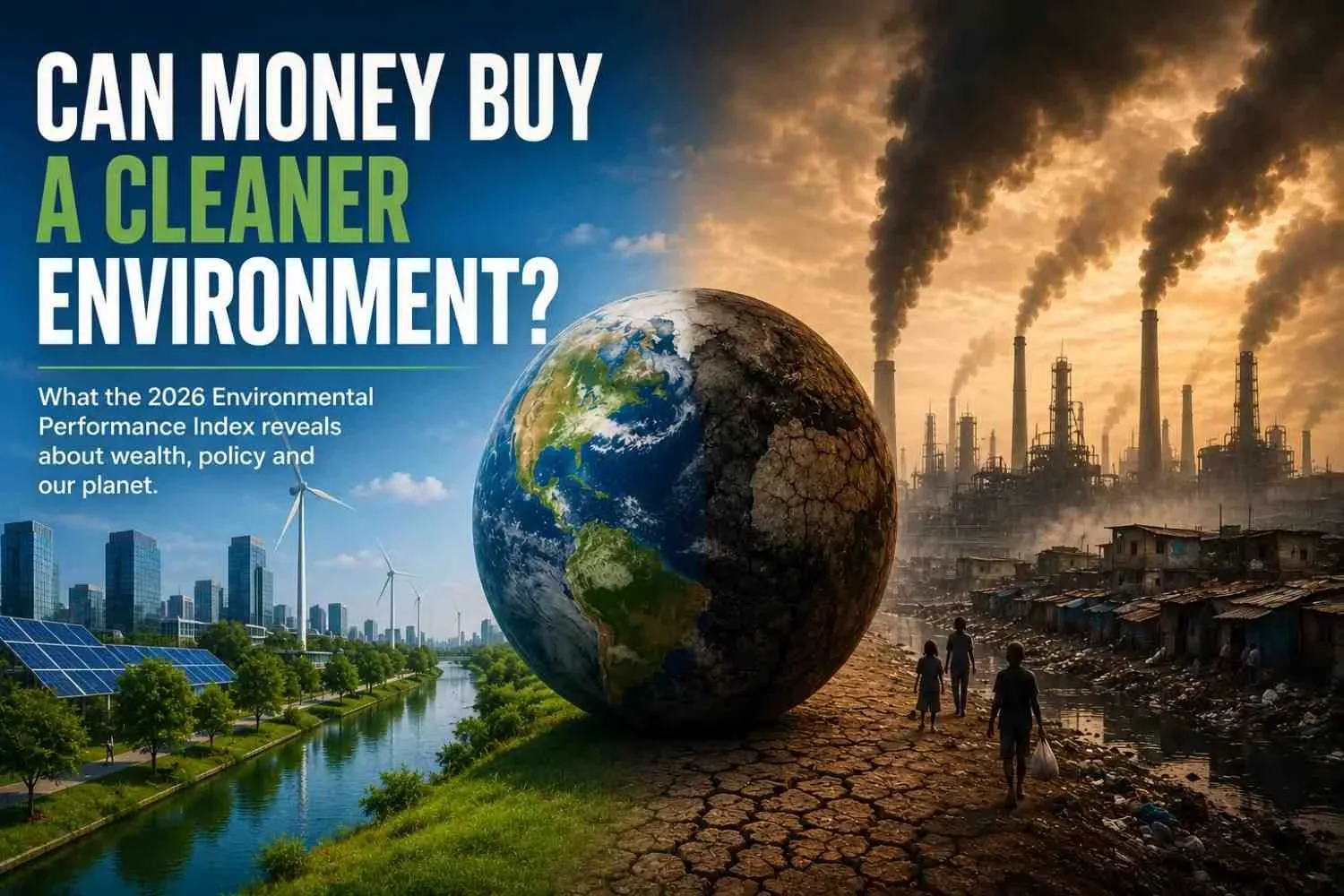
The latest Environmental Performance Index reveals global leaders and laggards, while raising important questions about wealth, policy and environmental progress.   Imagine two countries. One enjoys clean rivers, healthy forests, and fresh air. The other struggles with polluted cities, shrinking biodiversity, and rising climate risks. On the surface, the difference looks financial - richer nations simply have more means to safeguard the environment.  But is it so? The 2026 Environmental Performance Index (EPI) has once again highlighted on how nations rank on nature conservation and public health.Estonia claimed the top position this year, while European countries continued to dominate the rankings.Many lower-income countries continued to rank near the bottom, but the results raise a bigger question: Is environmental performance simply a reflection of economic wealth? It’s not a simple yes-or-no answer! Developed by Yale researchers, the Environmental Performance Index ranks countries based on dozens of environmental indicators. It evaluates factors such as air quality, sanitation, waste, biodiversity, climate policy, and ecosystem protection. The index goes beyond a single environmental measure, evaluating how effectively countries pursue economic growth while safeguarding the environment. The rankings matter every year because they tell a bigger story: not just who’s ahead or behind, but what path each country chose for development.Estonia's climb to the top is the result of long-term planning. Over the years, it has strengthened environmental policies while investing in clean energy, efficient waste management, and digital systems that support better management of natural resources.Across Europe, many countries have shown that economic growth and strong environmental standards can advance together. These results raise a further issue: if the European model is so effective, why has it not been applied globally?For many developing countries, the issue is less about ambition and more about competing priorities. With limited resources, governments must balance environmental action alongside poverty reduction, healthcare, housing, employment, and infrastructure.Many countries lack the financial resources needed to invest in clean technology or to restore degraded ecosystems. Rapid urbanisation makes it worse. Unchecked expansion of roads, housing, and industry often leads to higher pollution, shrinking green spaces, and increasing pressure on natural resources.The challenge is compounded by climate change. Countries with the lowest emissions are often among the most vulnerable to extreme weather, forcing governments to spend scarce resources on recovery instead of long-term environmental improvements. Comparing countries at different stages of economic development can therefore be misleading. A lower ranking does not necessarily indicate weak environmental commitment. It often reflects differences in income, governance, access to technology, and historical development. Similarly, a higher ranking does not mean every environmental challenge has been resolved.Experts say the bigger story lies beyond the rankings. Instead of focusing on who tops the list, they encourage a closer look at how countries are improving and where further action is needed. Ultimately, sustained progress is a better measure of success than rank alone. Countries that steadily improve air quality, expand renewable energy, strengthen waste management, or protect biodiversity are making meaningful progress, even if their rankings remain low. At the same time, top-performing countries cannot afford to be complacent, as environmental and climate challenges continue to evolve. The 2026 EPI also highlights that environmental protection cannot rest solely with governments. Businesses can reduce their environmental impact by adopting cleaner production methods and cutting emissions. Researchers help shape better policies through scientific evidence. Communities protect local ecosystems, while individuals contribute by conserving water, reducing waste, and choosing more sustainable products. Perhaps the biggest takeaway from this year's rankings is that wealth alone does not define environmental success. Lasting progress depends just as much on effective policies, strong institutions, and sustained action. Experts say lasting environmental progress is built on strong institutions, effective policies, public participation, and long-term planning. Countries that treat sustainability as a continuous priority rather than a short-term initiative are often the ones that achieve enduring results. The real value of the 2026 Environmental Performance Index lies beyond the rankings. Instead of debating who stands at the top or bottom, it should prompt every country to focus on a more meaningful challenge: What practical actions can we take today to create a cleaner, healthier, and more resilient future? At the end of the day, environmental progress is measured not by a country's position on a global index but by the difference it makes on the ground-cleaner air, healthier ecosystems, and better lives for the people who rely on them.   Sources:  Centre for Integrated Earth System InformationYale Centre for Geospatial Solutions   ...Read more

24 Jul 2026

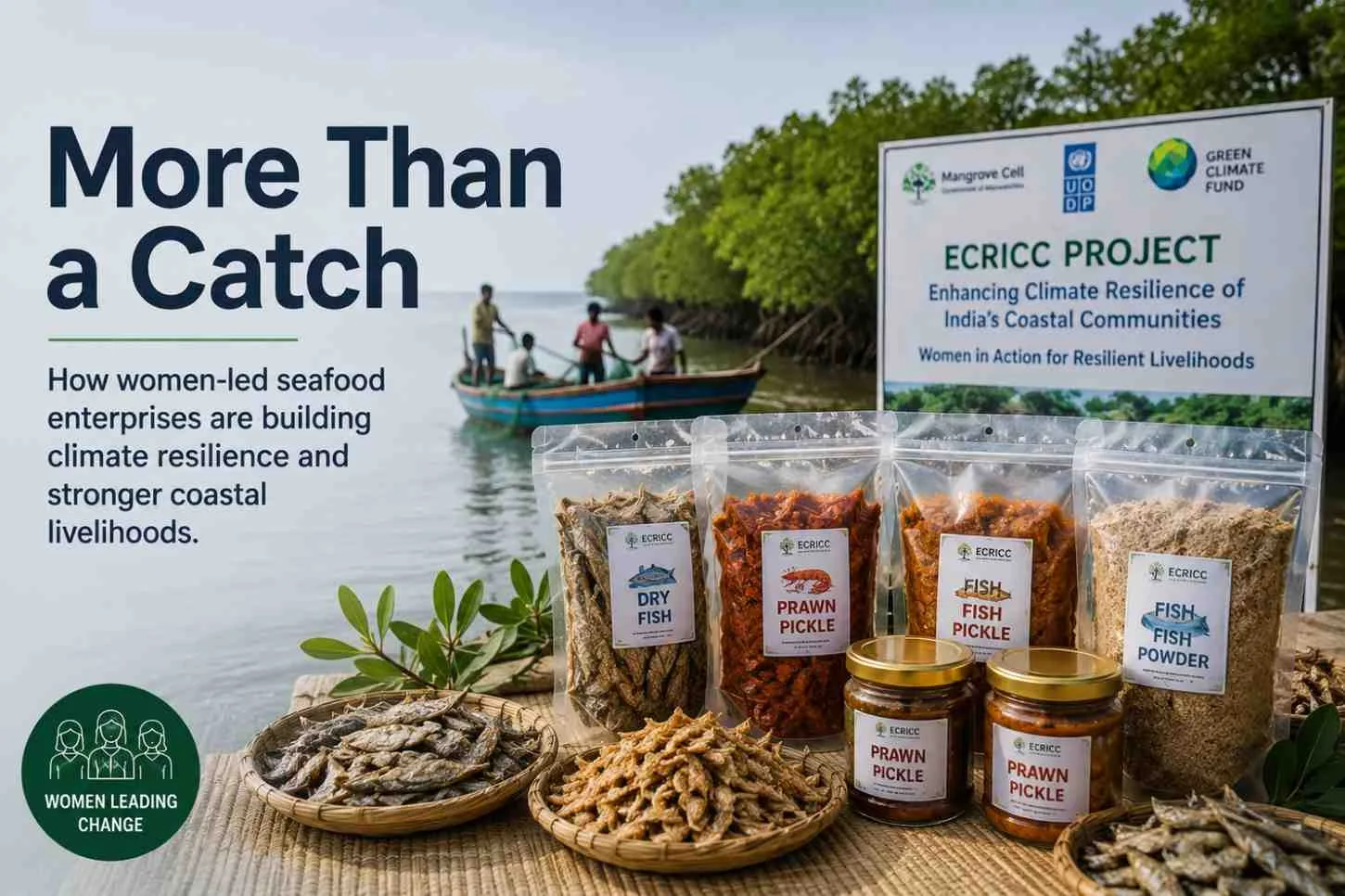
When coastal communities get the right support, the journey from the sea to the market can become a story of resilience, livelihoods and sustainable growth.   Kolkata |24 July, 2026:   For thousands of families along India's coastline, fishing is more than a livelihood- it is a way of life.But rising sea levels, shifting weather patterns, and declining fish stocks are making it harder for coastal communities to sustain their livelihoods. As climate threats increase, communities are exploring new approaches to protect their incomes and natural resources. On July 9, 2026, three women's self-help groups (SHGs) from Maharashtra brought value-added seafood products to a national exhibition under the Enhancing Climate Resilience of India's Coastal Communities (ECRICC) project, highlighting new livelihood opportunities for coastal communities.The initiative proves climate adaptation isn’t just about resilience - it’s about new jobs and income. By backing women entrepreneurs, sustainable fisheries and better market access, it shifts climate action from cost to opportunity. Instead of selling fresh fish at modest prices, the women are creating value-added seafood products through processing, packaging, and branding, helping them earn more from every catch.According to experts, this approach boosts household incomes, raises profit margins, cuts post-harvest losses, and generates new jobs in coastal communities.It also promotes improved food safety standards and gives producers access to wider markets and new customers beyond their local communities. The process begins with seafood sourced responsibly from local fishermen, followed by cleaning, processing, packaging and labelling prior to distribution through exhibitions, retailers and local markets. This coast-to-consumer value chain generates employment at every step - from procurement and processing to packaging, branding and marketing. Experts say models like this help communities earn more from existing resources rather than adding pressure on fish stocks.  Local Fishermen         ↓ Sustainable Fish Harvest         ↓ Cleaning & Processing         ↓ Packaging & Branding         ↓ Food Safety & Licensing         ↓ Exhibitions / Retail Markets         ↓ Consumers   The initiative is supported by the Mangrove Cell, the United Nations Development Programme (UNDP), and the Green Climate Fund under the ECRICC project.The programme equipped women with skills across the entire business chain; including food processing, quality control, branding, packaging, licensing, and enterprise management, while providing financial and business support too. These skills are helping them build businesses that can withstand climate and economic shocks. Experts say the real challenge begins after the exhibition. Long-term success will depend on building reliable supply chains, maintaining food safety standards, strengthening branding, improving logistics, and expanding access to stable markets. Quality products alone are not enough. Without strong support system, community enterprises may find it difficult to compete in larger markets.   Growing coastal businesses is only a part of the solution. Experts say long-term success will depend on balancing economic opportunities with healthy marine ecosystems through sustainable fishing, responsible sourcing, and stronger mangrove conservation. Sustainable management of local fisheries will be crucial to ensuring marine resources remain available for future generations.Experts believe wider access to finance, digital sales platforms, and organised retail networks can help women's self-help groups scale their businesses. Continued institutional support will be equally important to ensure growth is environmentally sustainable and community-driven. ProductValue AdditionCommunity BenefitDried FishHygienic processing & packagingLonger shelf life and higher incomeFish PickleReady-to-eat productBetter profit marginsFish PowderNutrient-rich food ingredientReduced fish wastePrawn PicklePremium branded productAccess to urban marketsDry Fish SnacksRetail-ready packagingEmployment for women The Maharashtra initiative suggests that climate resilience is built not only by protecting the environment but also by strengthening livelihoods. Experts say supporting women-led enterprises, improving seafood value chains, and conserving coastal ecosystemscan create a future where economic development and environmental sustainability reinforce one another.   Document Support:Press Information Bureau (9 July 2026), Mangrove Cell, Government of Maharashtra, Enhancing Climate Resilience of India's Coastal Communities (ECRICC), United Nations Development Programme (UNDP), Green Climate Fund (GCF), Food Safety and Standards Authority of India (FSSAI) – Food processing and licensing guidelines (background reference) Sources: Press Information Bureau (PIB) – 9 July 2026, Mangrove Cell, Government of Maharashtra, Enhancing Climate Resilience of India's Coastal Communities (ECRICC), United Nations Development Programme (UNDP), Green Climate Fund (GCF) ...Read more

21 Jul 2026

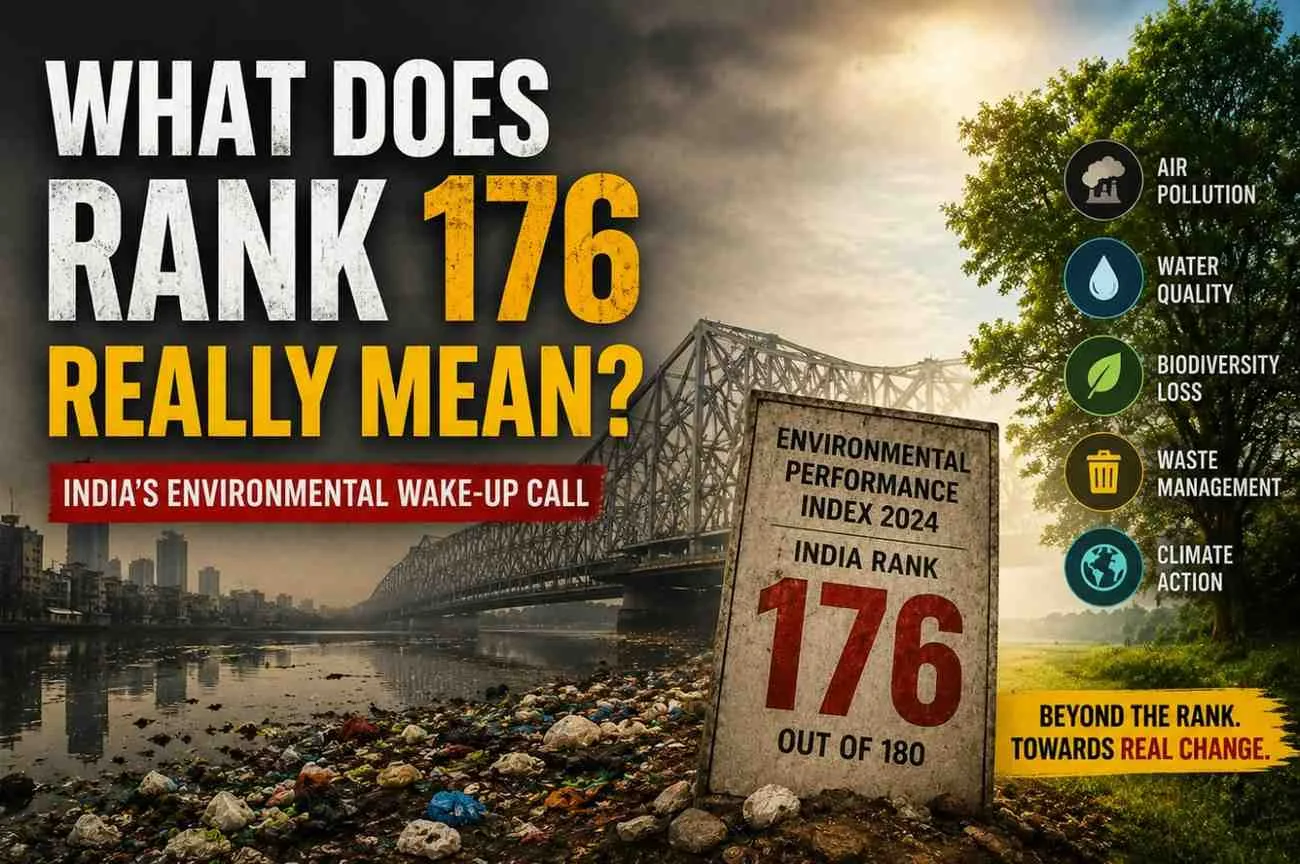
India's latest Environmental Performance Index ranking has reignited a debate that goes far beyond the final score.     Kolkata | 21 July 2026:   Another year, another low rank. India placed 176th out of 177 in the 2026 Environmental Performance Index, reigniting questions about what’s working, what isn’t, and how we measure success.  Out in July from Yale, the EPI scores 177 countries on 47 measures of health, nature, and climate. The numbers have sparked arguments, but the experts are saying not to read it as a report card but as a trend line Environmental Performance Index (2024)IndiaGlobal Rank176 / 180Overall EPI Score27.6 / 100Environmental Health Rank177Ecosystem Vitality Rank171Climate Change Rank133   The EPI measures performance across air quality, water, sanitation, waste, biodiversity, forests, emissions and more. Experts say this approach captures environmental health more broadly than climate goals or renewable capacity by themselves. Despite strong progress on renewable energy, India still lags in air pollution, waste management, water quality and biodiversity conservation. Experts note that clean power does not automatically address problems such as contaminated water bodies, waste mismanagement, depleting habitats, and urban air pollution. Since 2024, very little has changed. Until India tackles air pollution and gets serious on waste management, water management and ecosystem, the rankings won’t budge – no matter how fast renewable energy grows.The Ministry of Environment, Forest and Climate Change says environmental protection remains a priority, with programmes centred on renewable energy, afforestation, pollution control, and ecosystem conservation. Experts agree the direction is right, but real progress will depend on stronger implementation, consistent monitoring, and better coordination between the Centre and the states. Comparing rankings is only part of the picture. Each country begins its climate journey under different circumstances.Experts say that we need to look at emissions per person, total emissions, and where policy is headed. India is among the world's largest emitters largely because of its population. But on a per-person basis, its emissions remain well below those of many developed countries. India is investing in clean energy, electric mobility, green hydrogen, and forest restoration. But experts say the real measure of success lies elsewhere: cleaner air, safer water, healthier ecosystems, and less pollution. Without visible improvements on the ground, neither environmental outcomes nor EPI rankings are likely to improve. The EPI is more than a ranking- it is a reminder of where improvement is still needed. Experts say the real goal should not be a higher position on a global index, but cleaner air, healthier rivers, stronger ecosystems, and a better quality of life for millions. Source:  Yale Centre for Environmental Law & Policy, Environmental Performance Index 2024 (in partnership with Columbia University Centre for International Earth Science Information Network) ...Read more

20 Jul 2026

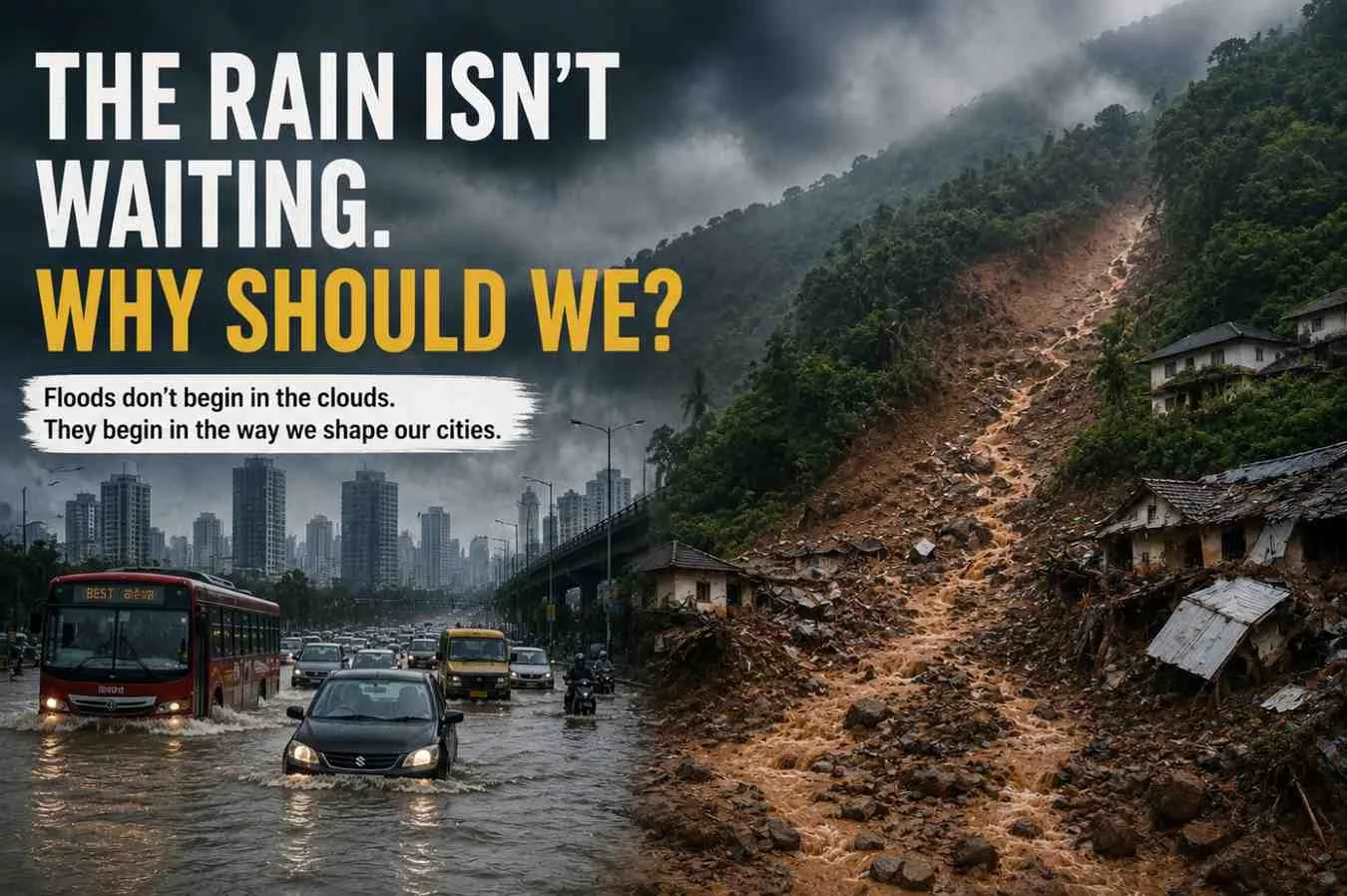
Floods don't begin in the clouds. They begin in the way we shape our cities.    By Tiyasha Ghosh    Can we keep blaming just the rain for floods? Or are our cities part of the problem even today? The monsoon arrives with hope, every year.Water for our reservoirs, life for our farms, and relief from the heat.However, every year, it leaves behind waterlogged streets, damaged infrastructure, destroyed homes and many lost lives. Two places, two disasters: Mumbai drowned, Wayanad collapsed! One is a city of skyscrapers and the other is a quiet forested district. Different locations but identical warning! The sky changed faster than the concrete below it. Our infrastructure was designed for a climate that no longer exists. We used old rainfall recording system and assumed stability. Today, climate change delivers heavier rain with no warning, everything at once.  Rain is arriving faster than we can handle. Cloudbursts are turning mountains into landslide zones. The question isn’t “how much rain this season?” But the question isn’t “how much?” It’s “how fast?” - and can our land and roads survive it? Which leaves us with one question: Whether India’s design standards use up-to-date rainfall data, or continue to rely on old IDF curves that don’t represent today’s climate.According to engineers, many drainage systems were built to handle rainfall expected once in several decades. However, climate records indicate that extreme rainfall events are occurring more frequently. Events once termed "once-in-a-century" storms may be happening much more often now.You can see the impact all over the country. Roads vanish underwater in hours. Drains can’t keep up. Buildings drown even after crores spent on their upgrades. In the hills, the ground itself gives way - mud, rocks and debris crashing into villages below. According to experts, the cause goes beyond rainfall - it points to failures in urban and infrastructure planning. Wetlands that previously stored excess rainwater have been reclaimed for development. Natural drainage channels have been constricted or obstructed. Hillsides have been cut to accommodate roads, hotels and buildings. In many vulnerable regions, declining forest cover has reduced the land’s capacity to absorb water during heavy rainfall. The cost goes far beyond concrete and steel. People lose homes and income. Kids stay out of school. Businesses close. Transport comes to a standstill. Hospitals get overcrowded. These storms are no longer just environmental problems - they hit our economy and society too. Experts argue that India needs to stop treating floods, landslides and waterlogging as separate events. They point to a larger issue like climate change, rapid urbanisation and weak planning coming all together. Unless cities plan for future rainfall instead of past records, every monsoon will bring the same question: Are we preparing for the next storm- or simply recovering from the last one? Heavy Rain       ↓ Wetlands & Lakes       ↓ Natural Streams       ↓ Rivers       ↓ Groundwater Recharge   (Current Situation)   Heavy Rain       ↓ Concrete Roads       ↓ Blocked Drains       ↓ Waterlogging       ↓ Floods & Landslides Natural drainage systems once absorbed excess rainwater. Urbanisation has disrupted these pathways, increasing flood risks The rain hasn't changed. The ground beneath it, has.Like water on concrete instead of a sponge, India's cities can no longer absorb what falls from the sky. Nature once managed the rain. Wetlands, forests, floodplains, and open land worked together to absorb, slow, and store water. Today, many of these natural safeguards have disappeared. Wetlands are disappearing beneath housing projects. Floodplains are turning into commercial hubs. Hillsides are being cut for development. And across India's cities, concrete has replaced the open ground that once soaked up rain. With heavy downpour, water becomes stagnant with no outlet for respite. It keeps flowing until it floods roads, homes, and entire neighbourhoods. Floods today are shaped as much by land use as by rainfall, experts say. Here's why. How do engineers decide how big a drain should be? They use Intensity-Duration-Frequency (IDF) curves, which estimate how much rain can fall, how quickly it may arrive, and how often such events are expected. The problem? A lot of these rules were made using old rainfall data. But climate change has changed those patterns. Cloudbursts have grown more frequent and short-duration rainfall has become more intense. For example, 100 millimetres of rain that previously fell for an entire day can now occur within two to three hours. Drainage systems have not evolved in line with changing rainfall conditions. Many continue to operate based on historical rainfall patterns that are no longer valid. Experts say India can no longer rely on yesterday's rainfall patterns. Infrastructure must be designed using today's climate realities. The challenge is even greater in the hills. Unlike cities, where water usually causes flooding, mountain regions face another danger- landslides. Cutting down forests and carving slopes for roads or buildings loosens up the soil. When heavy and long rainfall persists, water soaks in, weakens the slope, and everything collapses. The Wayanad landslide was a painful reminder: when heavy rain hits fragile hills and if we ignore the risks, it can turn deadly.Scientists say this is why climate adaptation can no longer remain separated from urban or infrastructure planning. Every new road, bridge, housing project, and drainage system must answer one question: Is it built for tomorrow's rainfall? ParameterEarlier ClimateCurrent ClimateRainfall PatternSpread over longer periodsIntense rainfall in short burstsDrainage DesignBased on historical rainfallFrequently exceededWetlandsLarger natural storageRapidly shrinkingFlood FrequencyLess frequentIncreasingClimate RiskModerateHigh Rain may trigger the disaster. But building for yesterday's climate could make it inevitable. Experts say India must rethink how it builds its cities. Instead of forcing water to adapt to development, development must adapt to water. And that begins with something many places have lost, i.e., space. Protecting floodplains, wetlands, hills, and stormwater channels isn't just about conserving nature- it's about protecting people. Because when nature's defenses disappear, concrete isn't enough. Experts say cities can't plan for tomorrow using yesterday's flood maps. Updated rainfall data should guide every development decision, and flood-prone areas must be identified before new roads, housing projects, or commercial complexes that are built. Experts also say IDF curves should be updated regularly so drainage systems are built for today's climate- not yesterday's. Technology can also make a huge difference. Floods can't always be prevented. But with accurate forecasts and real-time monitoring, their impact can be reduced through timely warnings and faster action. But technology alone is not enough; good governance is equally important. Experts say flood management shouldn't begin when the rain starts- it should begin long before. Drains need to be cleared before the monsoon, natural waterways kept free of invasions, and construction in high-risk areas are strictly regulated. Most importantly, agencies must work together before the disaster strikes. Communities also play a crucial role. Communities hold critical, lived knowledge like which streets flood first, which drains fail annually, and which areas remain mostly exposed. When local knowledge becomes part of disaster planning, warnings arrive sooner and responses become more effective. Small actions can also create a big impact. Keeping drains free of plastic waste, protecting neighbourhood ponds, planting trees, avoiding construction on natural drainage channels and following official weather advisories all help reduce flood risks. The lesson extends beyond Mumbai or Wayanad. Urban growth and climate change are colliding. One is covering the ground with concrete, the other is bringing heavier rain. What we build today will shape tomorrow's disasters. India has a choice: keep rebuilding after every disaster- or start preventing the next one. Or we can act now by investing in smarter planning, stronger natural defences, modern infrastructure and cities built for a changing climate. Because resilience is not built during an emergency. It is built way before the first raindrop falls. The cost of preparing may be high but the cost of not preparing will be higher. Mumbai and Wayanad were more than disasters - they were warnings. AspectMumbaiWayanadMain HazardUrban FloodingLandslidesPrimary CauseBlocked drainage & urbanisationFragile slopes & intense rainfallNatural Buffer LostWetlands & mangrovesForest coverMain ImpactWaterlogging & transport disruptionLoss of lives & infrastructure For decades, India has responded after the damage has been done. But experts say rebuilding after every flood and landslide is no longer enough in a climate where extreme weather is becoming the new normal. The focus must shift now from disaster response to disaster prevention. The solution begins with working alongside nature - protecting wetlands, restoring rivers, safeguarding forests, and modernizing drainage standards. It also means planning every new project around future rainfall, not outdated climate records. Climate resilience begins with collective action.Governments, businesses, planners, engineers, and citizens all have a major role to play. Because every protected wetland, every clear drain, and every preserved green space make a city stronger when the next storm arrives. The cost of acting may seem high today but the cost of doing nothing is higher. Every flooded street, every collapsed hillside, and every displaced family carry the same message: preparing before disaster is less costly than rebuilding after. Nature has always played by its own rules. Water will always find its way. Rivers will always seek their floodplains. Hills will always become unstable when forests disappear and slopes are pushed beyond their limits. The real choice is whether we build with nature- or keep building against it. Resilience isn't about rebuilding faster. It's about ensuring there's less to rebuild. As India enters a warmer and more uncertain future, every road, bridge, neighbourhood, and city will reflect the choices we make today. Because tomorrow's resilience is being built long before the next storm arrives. DOCUMENT & DATA STACK  DocumentPurposeIndia Meteorological Department (IMD) Rainfall DataCompare historical and current rainfall intensity.National Disaster Management Authority (NDMA) – Urban Flooding GuidelinesIndia's official recommendations for urban flood management.Geological Survey of India (GSI) – National Landslide Susceptibility MappingExplains why regions like Wayanad remain highly landslide-prone.IPCC Sixth Assessment Report (AR6)Scientific evidence linking climate change to increasing extreme rainfall events.Ministry of Housing & Urban Affairs (MoHUA)Urban drainage and climate-resilient infrastructure guidelines.Central Water Commission (CWC)Flood monitoring and drainage management data.ISRO National Wetland InventoryWetland loss and land-use changes across Indian cities. Key Data Points: TopicData/ObservationRainfall PatternIndia is witnessing more frequent short-duration, high-intensity rainfall events due to climate change.Urban FloodingExisting stormwater drains in many cities were designed using historical rainfall data that no longer reflects today's climate.WayanadHighly vulnerable due to steep slopes, fragile geology and extreme monsoon rainfall.WetlandsShrinking wetlands and encroached floodplains reduce natural flood storage capacity.Climate AdaptationExperts recommend updating Intensity-Duration-Frequency (IDF) curves using present-day climate observations.   ProblemSolutionUrban FloodingRestore wetlandsWaterloggingPermeable pavementsLandslidesAfforestation & slope stabilisationDrain OverflowRegular desilting & drain maintenanceClimate RiskClimate-resilient urban planning   Sources:India Meteorological Department (IMD) National Disaster Management Authority (NDMA) Geological Survey of India (GSI) Central Water Commission (CWC) Ministry of Housing & Urban Affairs (MoHUA) Intergovernmental Panel on Climate Change (IPCC AR6) ISRO National Wetland Inventory The Times of India (base report) ...Read more

19 Jul 2026

Chatbots feel weightless. The infrastructure behind them is anything but Ujjwal K Chowdhury Strapline: Every AI answer that appears instantly on a screen is the visible tip of an invisible supply chain of electricity, water, minerals and hardware — one that is expanding faster than the systems built to measure, let alone restrain, it. The illusion of weightlessness Type a question into a chatbot and the reply arrives in a second or two, apparently out of nowhere. That apparent weightlessness is the single biggest reason today’s mainstream artificial intelligence has drifted into an anti-ecological pattern: the interface hides a resource system as physical as a steel mill, while feeling as immaterial as thought itself.   Behind that reply sits a chain most users never see: a data centre drawing power from a regional grid; racks of accelerators converting electricity into heat; water or refrigerant carrying that heat away; a supply chain of mined minerals and fabricated silicon that had to exist before any of it could run; and, increasingly, an autonomous “agent” that may have quietly called the model dozens of times — planning, retrieving, verifying, retrying — before it ever answered. None of that shows up in the two seconds a user waits for a reply. That gap between visible convenience and invisible cost is where the ecological problem lives. Four ways today’s AI works against the planet 1. It treats electricity as free and infinite The scale is no longer subtle. Global data-centre electricity demand grew about 17% in 2025 — more than five times the growth rate of overall global electricity demand — while AI-specific facilities grew around 50% in the same year, according to the International Energy Agency’s most recent assessment. The agency’s satellite-tracking programme shows dedicated “AI factory” capacity has more than tripled in the past eighteen months alone. Lawrence Berkeley National Laboratory estimates that data centres already consumed 4.4% of all US electricity in 2023, on a path toward as much as 12% by 2028. This is not evenly distributed misfortune. It concentrates in specific places until local grids buckle: Ireland’s data centres now draw over a fifth of the country’s entire electricity supply, with Dublin’s local share pushing toward 80%; parts of Virginia, Arizona and the Netherlands face similar strain. AI accelerator rack density has risen roughly elevenfold since 2020 and could quadruple again within a couple of years, meaning the same floor space now demands vastly more power and cooling than it did five years ago — a physical fact that data-centre neighbourhoods, substations and transmission lines were never designed around. FACT BOX > - Data-centre electricity growth in 2025: ~17% globally (AI-specific: ~50%) > - AI-factory capacity: more than tripled in 18 months (IEA satellite tracking) > - Rack power density: up roughly 11x since 2020 > - Ireland’s data-centre electricity share: over 20% nationally, near 80% in Dublin 2. It treats water as someone else’s problem Cooling AI hardware consumes water directly, and generating the electricity that powers it consumes water indirectly, through the power plants themselves. A peer-reviewed 2025 review found that water use per AI workload can vary by more than 10,000-fold depending on the cooling system, the water intensity of the local grid, climate and utilisation — an enormous range that makes any single “AI uses X litres” headline close to meaningless without context. Earlier modelling had estimated the direct water cost of training a single large language model at roughly 700,000 litres, and projected global AI-related water withdrawal could reach several billion cubic metres by 2027. The ecological offence is not simply the volume; it is where that volume is drawn. Data centres frequently compete for water in the same watersheds as households, farms and ecosystems, often in drought-prone or rapidly urbanising regions. A company can accurately claim it “replenished” water somewhere else in the world while a local community, in the actual basin where the facility sits, faces real seasonal scarcity. Water taken from a stressed basin in July is not made whole by a replenishment project in a different river system entirely. 3. It hides its hardware and mineral footprint The environmental conversation about AI has focused heavily on electricity, but the physical hardware underneath it carries its own anti-ecological weight. Semiconductor fabrication requires high-temperature processing, fluorinated gases and ultrapure water; servers require aluminium, copper, steel and a list of critical minerals mined and processed through globally concentrated, often environmentally and socially fraught supply chains. Because the industry races to deploy ever more capable accelerators, hardware is frequently retired well before the end of its useful life — front-loading manufacturing emissions and generating electronic waste that is notoriously difficult to refurbish because of security requirements and proprietary designs. A narrow focus on data-centre electricity efficiency can therefore simply displace environmental burden upstream, onto mines and fabrication plants far from public view. 4. It multiplies itself through autonomy The newest and fastest-growing anti-ecological pattern comes from agentic AI — systems that plan, browse, write and execute code, call other software, and retry when something fails, often with limited human supervision. A single user request can silently become a “trajectory” of dozens or hundreds of underlying model and tool calls. Early research has found up to a 9.4-fold difference in energy use between agent architectures solving identical software tasks, driven mainly by unproductive loops, redundant multi-agent “debate,” and overly conservative verification steps. A 2026 study proposing an “Energy per Successful Goal” metric found agentic workflows used, on average, more than four times the energy of simpler linear approaches to reach the same outcome. Because these systems can be scheduled to run continuously, across thousands of accounts, with nobody watching each internal step, agentic AI represents autonomy without accountability — precisely the combination ecological management is built to prevent. The underlying design flaw: rebound Underneath all four patterns sits a single structural problem economists have seen before: rebound. Each time AI becomes more efficient per task, that efficiency tends to make AI cheaper and faster to deploy — which drives organisations to use far more of it, not less. A cheaper model attracts more users; a faster agent gets scheduled more often; saved computing capacity gets redirected into training an even larger model. This is a modern instance of the nineteenth-century Jevons paradox, in which more fuel-efficient steam engines led to more coal being burned overall, because efficiency expanded the ways coal could be profitably used. Today’s AI industry is repeating that pattern at digital speed: intensity per task is falling in many cases, even as total electricity, water and hardware consumption keeps climbing. HIGHLIGHT > “Efficient models can lower energy per task but may stimulate more use — a rebound effect analogous to Jevons’ paradox.” Tackling the challenge: what can actually be done The good news, according to researchers working across computer science, engineering and environmental policy, is that anti-ecological AI is a design failure, not a law of physics — and design failures can be corrected. Make lifecycle accounting mandatory, not voluntary. Model developers should be required to publish energy, water and carbon figures covering research, training, fine-tuning and expected inference use — not just the headline training run. Regulatory movement already exists: the European Union’s data-centre reporting rules and the emerging AI Act standards for general-purpose systems are early attempts to make these disclosures routine rather than exceptional. Measure outcomes, not tokens. “Energy per prompt” is a start, but a genuinely useful metric asks how much energy, water and carbon were spent per successfully completed, quality-adjusted task — capturing failed attempts, retries and wasted agent loops rather than rewarding systems that simply generate more text per watt. Treat water as a local-risk issue, not a global volume. Responsible siting means water-stress screening, seasonal operating limits, non-potable cooling sources and transparent, basin-specific disclosure — replacing vague corporate replenishment claims with site-level accountability. Put budgets and brakes on autonomous agents. Concrete engineering controls — hard limits on tool calls and reasoning steps, loop detection, model routing that defaults to the smallest sufficient model, and outcome-aware verification applied only where risk warrants it — can curb the silent multiplication effect that makes agentic AI so much more resource-hungry than a single chatbot exchange. Extend hardware life and close the supply chain loop. Modular, repairable server designs, transparent recycling, redeployment of older accelerators to less demanding tasks, and procurement rules that reward useful work per lifecycle impact — rather than peak benchmark performance alone — would blunt the upstream mineral and manufacturing burden. Impose absolute limits alongside efficiency targets. Because rebound can erase intensity gains, organisations need annual caps on total energy, water and hardware consumption — not only per-task efficiency goals — paired with an honest test of whether any given deployment is actually necessary. Who ends up paying The anti-ecological pattern is not only an environmental story; it is fast becoming a household economics story too. As data-centre campuses draw more power than entire cities, the cost of grid upgrades, new transmission lines and backup capacity has to be paid by someone — and much of it is landing on ordinary electricity ratepayers rather than the companies building the facilities. US utilities requested tens of billions of dollars in rate increases in a single recent year, with retail electricity prices climbing well ahead of inflation, and energy-policy researchers have begun openly asking whether households should be subsidising the power needs of trillion-dollar technology firms. That question — who bears the cost of AI’s physical footprint — is quietly becoming as contentious as the technology’s better-known debates over jobs, bias or misinformation. Communities near proposed data centres are pushing back for similar reasons. Objections increasingly cite not just water and electricity but noise, construction traffic, backup diesel generators and the strain that a single large campus can place on municipal services — concerns that rarely register in a corporate sustainability report measured in global percentages, because the burden is intensely local even when the company’s overall footprint looks modest on paper. Signs the pattern can be broken None of this is inevitable, and there is genuine evidence of course correction. Regulators in the European Union now require structured data-centre energy and water reporting. Some grid operators are experimenting with letting data centres act as flexible loads — absorbing surplus renewable power and throttling back during scarcity — turning a liability into a grid asset if the incentives are designed correctly. Chip-level closed-loop cooling systems, deployed by major cloud operators, are demonstrably cutting water use at the facilities where they have been installed. And a growing number of enterprises are beginning to ask, before deploying any AI feature, whether a smaller model or a simpler workflow could do the job just as well — a habit of restraint that barely existed in the industry two years ago. None of this requires abandoning AI’s genuine benefits — in climate modelling, grid management, disease research and elsewhere. It requires abandoning the pretence that those benefits are free. The technology that feels weightless on a screen is, underneath, one of the most physically demanding infrastructure projects humanity has ever built at speed. Recognising that is the first step toward building it responsibly rather than merely quickly. ...Read more